
Beirut is a city where history is not merely found in books but is etched into the very walls of its vibrant neighborhoods. For the discerning collector and the curious wanderer alike, the landscape of art galleries Beirut offers an immersive journey through the resilience and ingenuity of the Levant. Since its establishment in 2014, NESArt has stood as a sanctuary for Near Eastern creativity, bridging the gap between historical heritage and the cutting edge of contemporary art Beirut.
In this comprehensive guide, we explore the evolution of the Lebanese capital as a Mediterranean art hub, identify the districts that pulse with creative energy, and provide expert insights into building a world-class collection of Lebanon art. Whether you are navigating an art gallery website or walking through the sun-drenched streets of Gemmayzeh, understanding the cultural nuances of this region is the first step toward meaningful acquisition.
The story of the Beirut art scene is one of constant renewal. Often referred to as the “Paris of the Middle East,” Beirut has historically served as a bridge between Eastern traditions and Western modernism. The city’s artistic pedigree dates back to the late 19th-century “Marine School of Beirut,” where pioneers like Daoud Corm and Ibrahim Serbai transitioned from technical realism to expressive fine arts.
Following the intellectual renaissance of the 1940s, the founding of the Académie Libanaise des Beaux-Arts (ALBA) in 1937 provided a formal framework for fine arts education. By the 1960s, the district of Hamra was already teeming with over twenty galleries, establishing a precedent for the “proto-institutional” environment we see today. Despite the scars of civil war and more recent traumas like the 2020 port explosion, the community of art galleries in Lebanon remains a bastion of plurality and freedom of expression.
Today, modern art of the Near East is characterized by its engagement with identity, memory, and political complexity. Artists from Syria, Irak, Jordan, Palestine or Egypt no longer seek only to represent beauty but to “restore the memory” of a region that was once the cradle of civilization. This is the core mission of NESArt: to celebrate Near Eastern heritage while fostering a deeper appreciation for the modern voices emerging from the Mesopotamian plains and Lebanese mountains.
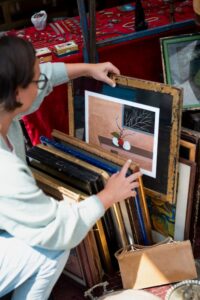
Beirut’s art world is decentralized, woven into the fabric of its residential and commercial streets. To truly experience art galleries Beirut, one must explore these distinct cultural enclaves.
Gemmayzeh is perhaps the most iconic district for those seeking fine arts. Its traditional architecture, characterized by triple-arched windows, houses some of the city’s most forward-thinking spaces.
Just east of Gemmayzeh, Mar Mikhaël offers an industrial aesthetic that perfectly complements large-scale installations and avant-garde works.
The western side of the city remains the intellectual hub, anchored by the American University of Beirut (AUB).
For a more refined experience, Achrafieh offers galleries set within historic villas and modern high-rises.
The year 2025 marks a period of “lukewarm resilience” for the Lebanese art market. Gallerists have shifted toward hybrid events and collaborative cultural days to maintain momentum. When attending an art gallery art exhibition in Beirut today, visitors should expect:
At NESArt, we recently sponsored the inaugural exhibition “Baghdad Beirut, The Uncharted,” which featured five emerging artists. This show underscored the importance of cultural dialogue across borders, highlighting how Iraqi and Lebanese creators share a common history of trauma and transcendence.
While a traditional art gallery focuses on primary sales, NESArt operates as a comprehensive advisory and expertise agency. Directed by Alexis Mouawad, the firm provides the data-driven insights necessary to navigate a market that is often less transparent than its Western counterparts.
By visiting our art gallery website, collectors can explore our downloadable catalogs and learn more about our commitment to “revalorizing” regional art. We see ourselves not just as intermediaries, but as stewards of a heritage that must be protected for future generations.
Building a collection in a volatile yet vibrant market like Beirut requires a blend of intuition and professional guidance.
Many new collectors fall into common pitfalls that can diminish the joy and value of their acquisitions.
NESArt is not only an advisory firm but also a patron of talent. We recently branched into artist management to guide emerging creators toward international exposure. For artists looking to engage with our management services, follow these steps:
Step 1: Prepare Your Portfolio
Compile a high-quality PDF containing your CV and up to 15 images of recent works. Ensure each piece has a description detailing the medium, dimensions, and the narrative intent behind it.
Step 2: Define Your Narrative
Near Eastern creativity is rooted in identity. Your application should include a 250-word statement explaining how your work engages with regional history or contemporary questions.
Step 3: Research Eligibility
Our residency programs often target artists currently based in Lebanon, Syria, Irak, Jordan, Palestine and Egypt who are at the beginning of their professional careers. Some programs, like those associated with the Saradar Collection or the Beirut Art Center, have specific annual deadlines.
Step 4: Submit via Official Channels
Visit the NESArt contact page or our dedicated residency portal to submit your documentation. Be sure to check for open calls before major festivals like “Beirut Art Days.”
Step 5: Follow Up and Network
The art world in Beirut is tight-knit. Engaging with our friends at the Charles Corm Foundation or participating in public talks can significantly improve your visibility.
Dr. Ray Jabre Mouawad, a renowned historian and academic figure associated with Lebanon sacred art research, emphasizes that the restoration of medieval frescoes is vital for “restoring the dignity” of the Orient. Her work on Oriental icons highlights how religious symbiosis between communities in Mount Lebanon has created a unique visual language of overlapped symbolism.
When collectors invest in sacred art or fine arts, they are participating in this process of historical stewardship. Professional advisors like Alexis Mouawad work closely with historians to ensure that every piece in the NESArt catalog is contextualized within this rich tapestry of “cross-cultural exchange.”
To find the best opportunities in the market, use these advanced search terms:
By understanding these terms, you can refine your searches on any art gallery website and uncover “undiscovered talents” before they reach the mainstream auction circuit.
In the Near East, “Modern Art” typically refers to the period from the late 19th century to the 1970s, characterized by the search for national identity. “Contemporary Art” refers to works produced from the 1990s onward, often dealing with the aftermath of war, globalism, and digital media.
Verification involves checking the provenance (history of ownership), obtaining a Certificate of Authenticity (COA) signed by the artist or a recognized authority, and potentially commissioning a professional appraisal through an agency like NESArt.
Yes. Archaeological objects produced before 1700 are considered “cultural property” and are generally prohibited from export. For modern works, a ministerial export license may be required if the piece is classified as being of “national interest.”
While a gallery represents specific artists, an art consultant provides unbiased advice across the entire market. They assist with due diligence, price negotiations, and long-term collection management, ensuring your investment is both culturally and financially sound.
The Sursock Museum, Beirut Art Center (BAC), and larger galleries in Karantina like Sfeir-Semler are the premier venues for large-scale and experimental installations.
Beirut remains a city of profound creative energy, where every art gallery art exhibition is a testament to the enduring human spirit. By navigating the world of art galleries Beirut with intention and expert guidance, you do more than acquire an object you become a part of the “restoration of memory” for the Near East.
At NESArt, we are passionate about celebrating our heritage and forging new understandings of our culture. We welcome all who seek meaning through art to explore our collection and join us in preserving the rich artistic legacy of Lebanon and beyond. Visit our art gallery website today to download our latest catalog and begin your journey into the heart of Mediterranean creativity.
By following this guide, you are now equipped to discover the creative pulse of Lebanon. The world of fine arts in Beirut is waiting for you vibrant, resilient, and utterly uncharted.
Input your search keywords and press Enter.