

 Ucheed SEO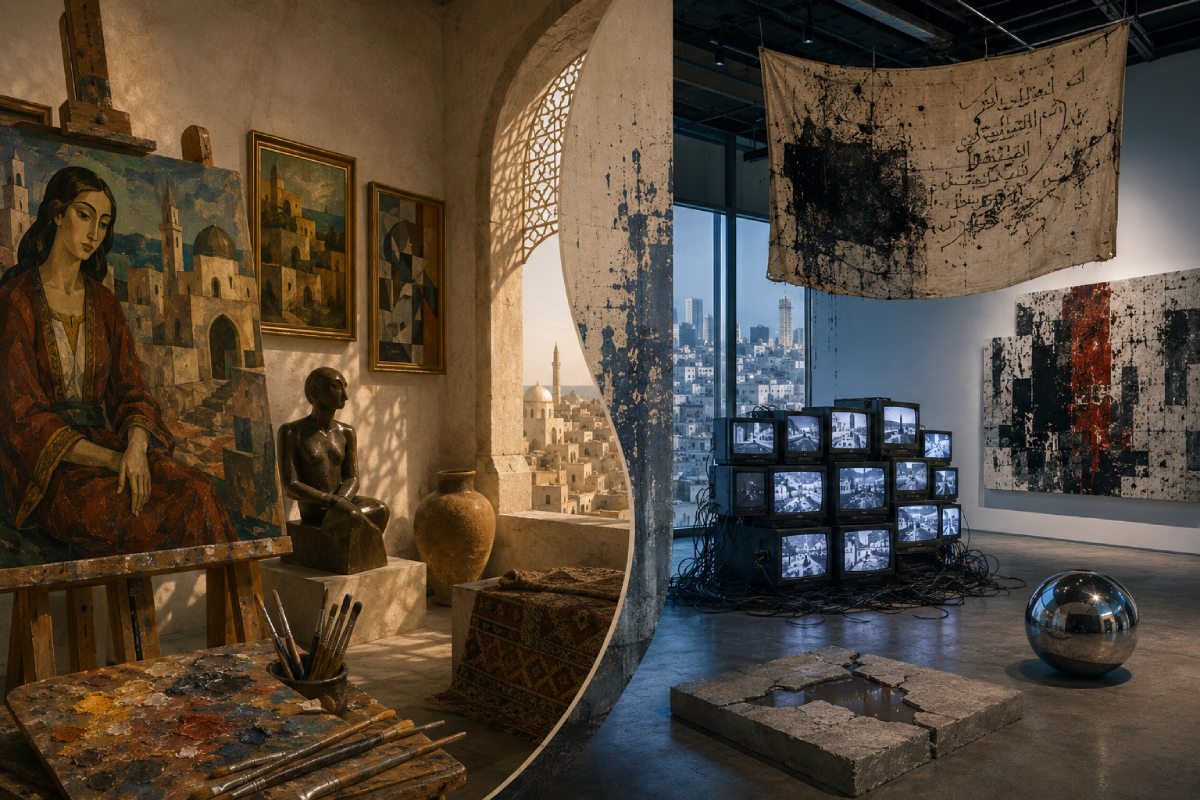
Modern Art vs. Contemporary Art: A Guide for Middle Eastern Art Collectors
The artistic landscape of the Near East is a rich tapestry woven with historical resilience, cultural complexity, and aesthetic innovation. For the discerning collector or the passionate enthusiast, navigating the halls of a modern art gallery in Beirut or Amman is not merely a leisure activity, it is an immersion into the soul of a region. However, a fundamental question often lingers in the minds of those beginning their journey: what, in the Near East, is the actual difference between modern and contemporary art?
At NESArt, we serve as a sanctuary for Near Eastern creativity, welcoming all who seek meaning through art. Our mission is dedicated to promoting and preserving this rich heritage, whether through our art advisory services or our rare artist management program that offers artists a space to create without the pressures of the commercial market.
To build a collection of lasting value, one must first master the vocabulary of the industry. This guide provides an expert exploration into the Levant art history, clarifying the nuances between these two pivotal eras and explaining how they intersect.

Defining the Timeline: Where in the Near East Modernism Ends and Contemporary Begins
In the global discourse of fine arts, the timeline of modern art typically spans from the late 19th century roughly the 1860s up to the 1970s. This was an era defined by a radical break from traditional academic realism. Artists began to experiment with the subjectivity of experience, focusing on how they felt about the world rather than just how it appeared.
However, when we examine modern art on the wider Middle Eastern context, the timeline shifts to align with regional socio-political milestones. The “Modernist Awakening” in the Arab world, or Nahda, found its footing artistically between the 1920s and the 1970s. This period was characterized by a search for a unifying cultural identity following the end of the Ottoman Empire and later the end of the colonial mandates. Lebanese artists like Paul Guiragossian and Saliba Doueihy fused Western techniques with local heritage, creating a distinct form of modern and contemporary art that reflected the region’s aspirations.
So, what is contemporary art in the Near Eastern sense? While the Western contemporary art begins in the 1960s, in the Levant, the transition is often tethered to the outbreak of the Lebanese Civil War in 1975, as Lebanon was the intellectual hub of the Middle East. The “Post-War Generation” shifted away from the earnest, often utopian projects of the modernists toward more skeptical, conceptual, and research-based practices. Today, contemporary art is defined as the “art of the now,” produced by living artists who engage with current global and local issues.
| Aspect | modern art (1930s–1970s) | contemporary art (1975–Present) |
| Primary Philosophy | Subjective expression & national identity. | Conceptual inquiry & social commentary. |
| Core Mediums | Oil on canvas, bronze, fine arts techniques. | Multimedia, digital, installation, performance. |
| Key Intent | “How can I express my truth?” | “What is truth and who decides?” |
| Market Status | Established “Blue-Chip” assets. | Dynamic, speculative, and high-growth. |
Key Characteristics of Modern Near Eastern Masterpieces
First it is a rejection of the past and a gateway to the future. The pioneers of modern art in the Middle East were often educated at prestigious institutions like the Ecole des Beaux-Arts in Paris, but they returned home to create something near new, merging the new western techniques with the local narratives that takes a singularity of expression to each part of the Middle East.
A modern art gallery focused on the Near East will typically highlight works that showcase:
- A Fusion of Heritage (Istilhim al-turath): The use of traditional motifs, such as calligraphic forms or local landscapes, reimagined through the lens of Cubism, Surrealism, or Fauvism.
- Formal Innovation: A departure from three-dimensional perspective in favor of flattened planes, vibrant color palettes, and bold, expressive brushwork.
- National Narrative: Many types of modern art in this era were deeply tied to independence movements and the forging of a post-colonial identity.
Artists like Mahmoud Said in Egypt or Shafic Abboud in Lebanon represented the pinnacle of this movement. Their work was earnest and often sought to capture the “spirit” of the people. At NESArt, we recognize these works as the foundation of regional art history, representing a “Golden Age” of creativity that continues to command record prices at international auctions.
The Global Dialogue of Contemporary Art
If modern art is a window into the artist’s soul, then contemporary art is a mirror held up to society. The contemporary art definition has expanded to include anything from digital collage to large-scale installations that disappear after three days.
In Beirut, contemporary art emerged as a powerful medium for processing trauma and questioning historical narratives. A master of fine arts graduate today is less likely to be concerned with the “purity” of a painting and more interested in its “context.” For example, artists like Walid Raad or Akram Zaatari use archival documents and photography to explore the “latency” of the Civil War.
Nowadays Contemporary art is no longer just about the Middle East; it is about the Middle East’s place in a globalized world. At NESArt, our artist management program supports this dialogue, providing mid-career and emerging practitioners with the space to venture beyond their usual parameters. This experimental nature is a hallmark of contemporary art, making it a “test bed” for new formats that blend art, technology, and social activism.

Why the Distinction Matters for Valuation and Investment
For the Middle Eastern art collector, the difference between modern and contemporary art is not just academic it is financial. The valuation of a piece depends heavily on its classification within art history.
The Modern “Blue-Chip” Market
The market for modern art is characterized by “rarity” and “provenance.” Because many countries in the region have faced periods of instability, sourcing authentic modern works with a clear history of ownership is difficult. This scarcity has driven prices to new heights. In 2025, modern Syrian master Louay Kayali realized nearly $1 million at auction, reflecting a 9.4% rise in total MENA auction sales. These works are considered stable, inflation-resilient assets for those seeking a store of wealth.
The Contemporary Growth Sector
While the global “ultra-contemporary” market has seen some cooling, auction sales for MENA artists under 45 actually rose by 5.1% in 2025. Contemporary art offers a different investment profile:
- Discovery Potential: Identifying “stars on the rise” before they gain institutional backing can lead to significant returns.
- Institutional Support: Collectors often look for an artist’s presence in museum exhibitions (like the Sursock Museum in Beirut or Louvre Abu Dhabi) as a validator of value.
- Diversity of Mediums: From digital art to photography, which now holds 10% of the market share, contemporary art allows for a more diversified portfolio.
At NESArt, our advisory services help collectors balance their portfolios between the stability of modern art and the exciting potential of contemporary art.
How-to-Apply: A Step-by-Step Guide to Art Acquisition
Building a collection of fine arts requires a disciplined approach. Follow these steps to ensure your acquisitions are both meaningful and financially sound:
- Define Your Mission: Are you collecting for cultural preservation, personal enjoyment, or as a financial hedge? NESArt encourages collectors to buy what they love, as personal resonance is the foundation of a lasting collection.
- Educate Your Gaze: Visit every modern art gallery and museum you can. Study the fine art definition and learn to distinguish between different types of modern art like figurative modernism versus calligraphic abstraction.
- Research Provenance: This is the most critical step in the Near East. Demand documentation that tracks the history of the artwork’s ownership. NESArt prioritizes transparency to protect collectors from forgeries or illicitly exported works.
- Engage with the Living Scene: Don’t just look at the past. Visit a contemporary art residency or fair, such as the Arab Art Fair, to meet artists and understand the stories behind their creations.
- Consult an Expert: Before making a major purchase, especially on the secondary market, seek professional advisory. Our team at NESArt leverages nearly a decade of experience to provide defensible market-value assessments .
Common Beginner Mistakes to Avoid
Even those with a master of fine arts can fall into traps when navigating the volatile Middle Eastern market. Avoid these common pitfalls:
- Chasing Trends: The art market is often shaped by “algorithm-driven hype.” Buying a piece just because it’s viral on an art gallery website can lead to regrettable purchases when the trend cools.
- Neglecting Logistics: Fine arts are delicate. Beginner collectors often overlook the costs of climate-controlled storage, insurance, and professional framing, which are essential for preserving the condition and thus the value of the work.
- Ignoring the “Middle Market”: While everyone wants a “masterpiece,” the $50,000–$100,000 price bracket showed the strongest performance in 2025. There is immense value in the mid-tier segment that many beginners skip.
- Failing to Verify Title: Ensure the seller has the legal right to sell the work. In countries with complex export laws like Lebanon and Syria, this is non-negotiable.
The Role of Education and Institutional Influence
The prestige of an artist is often tied to their academic background. Whether they hold a master of fine arts from the Lebanese University or have participated in a high-profile residencies or for example is represented by NESArt, institutional validation is a key marker of value. The art history of the region is being rewritten as we speak. Major museums in the West are now curating solo shows for Near Eastern artists, which “builds bridges” and increases the global appreciation of regional modern and contemporary art. This institutional shift ensures that the fine arts of the Levant are no longer seen as peripheral, but as central to the global narrative of human creativity.
Expert Insights: The Future of the Near Eastern Market
As we look toward 2026, several trends are reshaping how we interact with modern art Expert analysis suggests a “tectonic shift” toward experiences over just objects. High-net-worth collectors are increasingly seeking studio visits, process-driven narratives, and experiential collecting opportunities.
Furthermore, contemporary art is becoming more technologically integrated. 51% of high-net-worth collectors purchased digital artworks in 2024 or 2025, and blockchain-backed provenance records are becoming the industry standard. At NESArt, we embrace these innovations while remaining deeply rooted in the physical and spiritual heritage of our region.
Frequently Asked Questions (FAQ)
Q: What is the most important part of the contemporary art definition?
A: Unlike modern art, which focuses on the artist’s subjective expression, the most important part of contemporary art is the concept. The idea behind the work is often more significant than the physical form itself.
Q: Where can I see types of modern art in Beirut?
A: The Sursock Museum is an essential destination, housing a collection that spans from the late 1800s to the early 2000s, including works by icons like Aref el Rayess and Shafic Abboud.
Q: Why does NESArt offer a residency representation program?
A: We believe that for fine arts to flourish, artists need a “sanctuary” where they can experiment without commercial pressure. This fosters a deeper cross-cultural dialogue and keeps the regional art scene vibrant.
Q: Is modern art a safer investment than contemporary art?
A: Generally, yes. modern art pieces are considered “Blue-Chip” assets with a proven track record. However, contemporary art offers the potential for much higher growth if you invest in an artist early in their career.
Actionable Tips for New Collectors
- Visit the “Box Office” of Culture: Attend regional fairs like Art Dubai or Abu Dhabi Art to see the “character” of the market.
- Request a Condition Report: Never buy a piece especially modern art without a professional assessment of its physical state.
- Follow Niche Hashtags: Use Instagram to discover emerging talent, but always verify their institutional presence before purchasing.
- Think Long-Term: Collect with a “legacy mindset.” A well-curated collection of fine arts is a gift to future generations and a preservation of Near Eastern history.
Conclusion: Etching Your Own Story in Stone
Understanding what is modern art versus what is contemporary art is the key that unlocks the door to a deeper appreciation of Near Eastern heritage. Whether you are drawn to the earnest utopianism of a modernist oil painting or the provocative conceptualism of a contemporary installation, your role as a collector is to be a steward of culture.At NESArt, we invite you to uncover the legacy with us. By bridging the gap between ancient narratives and modern to contemporary visionaries, we ensure that the stories etched in stone continue to resonate in a digital world. Whether you are visiting a modern or contemporary art gallery for the first time or expanding an established collection, remember that every piece of art you acquire is a chapter in the ongoing history of the Near East.

